

Roof ventilation is easy to overlook. After all, you can’t really see it from the outside of your home. Most homeowners are more likely to think about shingles, flashing, or gutters.
But what’s happening underneath your roof matters just as much. Good attic airflow can affect how long your roof lasts. It can also make a difference in how hard your heating and cooling systems have to work.
For Greenwood Village homeowners, ventilation is especially worth paying attention to. Many homes in the area sit on larger, established lots with mature tree cover. Some homes are also older. Ventilation problems can quietly develop over time. You may not notice anything is wrong until your roof or attic starts showing signs of trouble.
What Does Roof Ventilation Actually Do?
A properly ventilated attic keeps air moving throughout the space. Fresh air usually enters through intake vents under the eaves, such as soffit vents. Warm air then leaves through exhaust vents near the ridge or peak of the roof.
This steady airflow helps keep your attic closer to the outdoor temperature throughout the year. Without it, attic temperatures can become extreme.
During summer, a poorly ventilated attic can get much hotter than the air outside. That heat can move into your living space below. As a result, your air conditioner may have to work harder to keep your home comfortable.
Winter creates a different problem. Heat from your home can escape into the attic. If ventilation is poor, that heat can warm parts of the roof deck. Snow may then start melting even when temperatures outside are freezing.
Ventilation Can Help Prevent Ice Dams
That uneven melting can lead to ice dams.
As snow melts, water travels toward the colder edges of the roof. It can then freeze again near the eaves. Over time, the ice builds up and creates a dam.
New meltwater can get trapped behind it. Instead of draining from the roof, water may work its way underneath the shingles.
Proper ventilation and insulation help keep roof temperatures more consistent. This allows snow to melt more evenly and reduces the chance of ice dams forming.
If your Greenwood Village home has dealt with ice dams winter after winter, your attic ventilation may be part of the problem. Insulation could also be contributing.
Poor Ventilation Can Shorten Shingle Life
Your attic also affects your shingles.
Asphalt shingles are designed to last for a certain amount of time under normal conditions. Manufacturer warranties generally assume the roof has adequate attic ventilation.
When summer heat gets trapped in the attic, it can speed up shingle aging from underneath. Over time, this added stress can shorten the life of your roof. You could end up needing a replacement earlier than expected.
The tricky part is that this damage happens slowly. Most homeowners don’t connect shingle wear with poor ventilation until a roofer spots the issue during an inspection.
Common Ventilation Types on Denver-Metro Homes
Several types of roof vents are common around Greenwood Village and the Denver metro area.
- Ridge vents run along the roof’s peak. They provide continuous exhaust and are often an effective, low-profile choice for sloped roofs.
- Soffit vents are located underneath the eaves. They allow fresh air into the attic. Ridge vents need enough soffit intake to work properly.
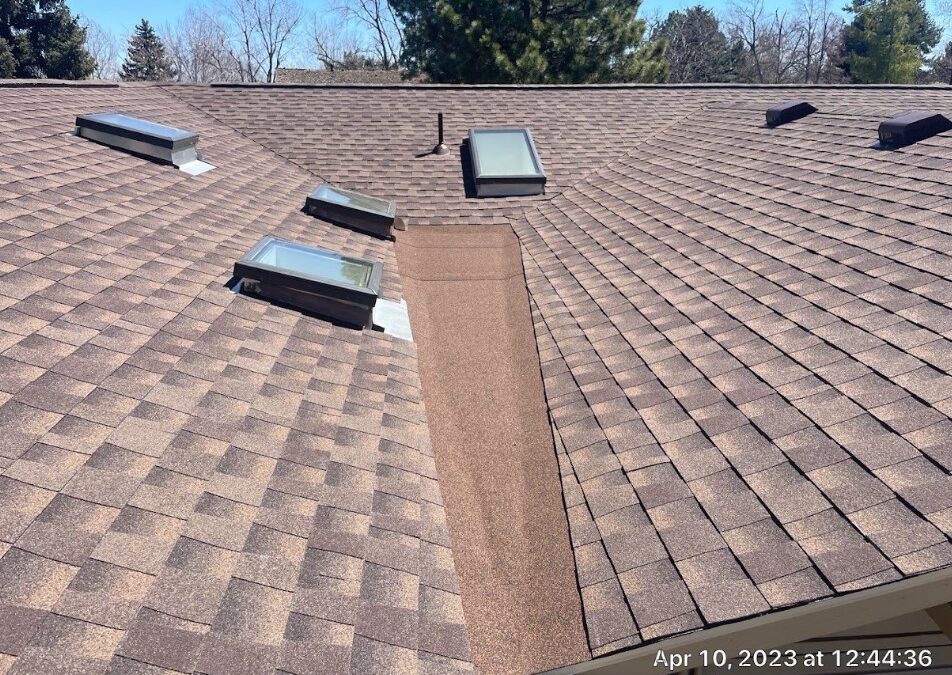
- Box vents and turbine vents provide more localized exhaust. You may see these on older Greenwood Village homes that were built before ridge vent systems became more common.
- Gable vents are installed near the peak of a home’s end walls. They are commonly found on homes with gable-style roofs rather than hip roofs.
Signs Your Attic May Have a Ventilation Problem
Not sure whether your ventilation is doing its job? There are a few warning signs to watch for:
- Your attic feels extremely hot during summer.
- Your attic feels unusually warm compared to the outdoor temperature in winter.
- Ice dams have formed along your roof in previous winters.
- You notice moisture, mold, or a musty smell in the attic.
- Shingles are curling or losing granules earlier than expected.
- Your summer cooling bills seem unusually high compared with similar nearby homes.
What Happens During a Ventilation Assessment?
A good ventilation assessment looks at the entire airflow system. Simply having vents on your roof doesn’t necessarily mean you have enough ventilation.
The goal is to have the right balance between intake and exhaust.
For example, your roof might have plenty of ridge ventilation but not enough soffit intake. Soffit vents can also become blocked when insulation is added to an attic.
Sometimes improving ventilation means adding new vents. Other times, the solution may be as simple as clearing existing intake vents so air can move properly again.
Frequently Asked Questions
Can I Fix a Ventilation Problem Without Replacing My Roof?
In many cases, yes. Ventilation improvements don’t automatically mean you need a new roof.
A roofer may recommend adding or clearing soffit vents. Other improvements can sometimes be completed as a standalone project. Ridge ventilation can also be added during a future re-roof when appropriate.
How Do I Know if I Have an Insulation or Ventilation Problem?
The two work together, which can make the answer tricky.
Poor insulation and poor ventilation can cause similar symptoms. Ice dams and uneven attic temperatures can come from either issue. Some homes have problems with both.
That’s why a professional assessment should look at insulation and ventilation together.
Can Better Ventilation Lower My Energy Bills?
It can. The exact savings will depend on your home.
During summer, better airflow can reduce the amount of heat trapped in your attic. That can take some of the strain off your air conditioning system. More consistent attic temperatures in winter can also help address uneven heat loss.
Should Ventilation Be Checked During a Roof Inspection?
Yes. A thorough roof inspection should look beyond the shingles.
Your attic can reveal ventilation and insulation problems that aren’t visible from the ground or roofline. Checking the attic gives your roofer a better picture of how the entire roofing system is performing.
Wondering if your attic ventilation is actually doing its job? Schedule a free inspection or reach out to our team with your questions. We can take a closer look and help you understand what’s happening with your Greenwood Village roof.